



Notes from inside NetSuite
Practical writing and guides on portals, point of sale, integration, and B2B commerce for operators who run their business on NetSuite. Research-backed, vendor-honest, no fluff.
News you care about. Tips you can use.
One email a week. New articles, NetSuite release notes worth knowing, and the occasional teardown.
Featured
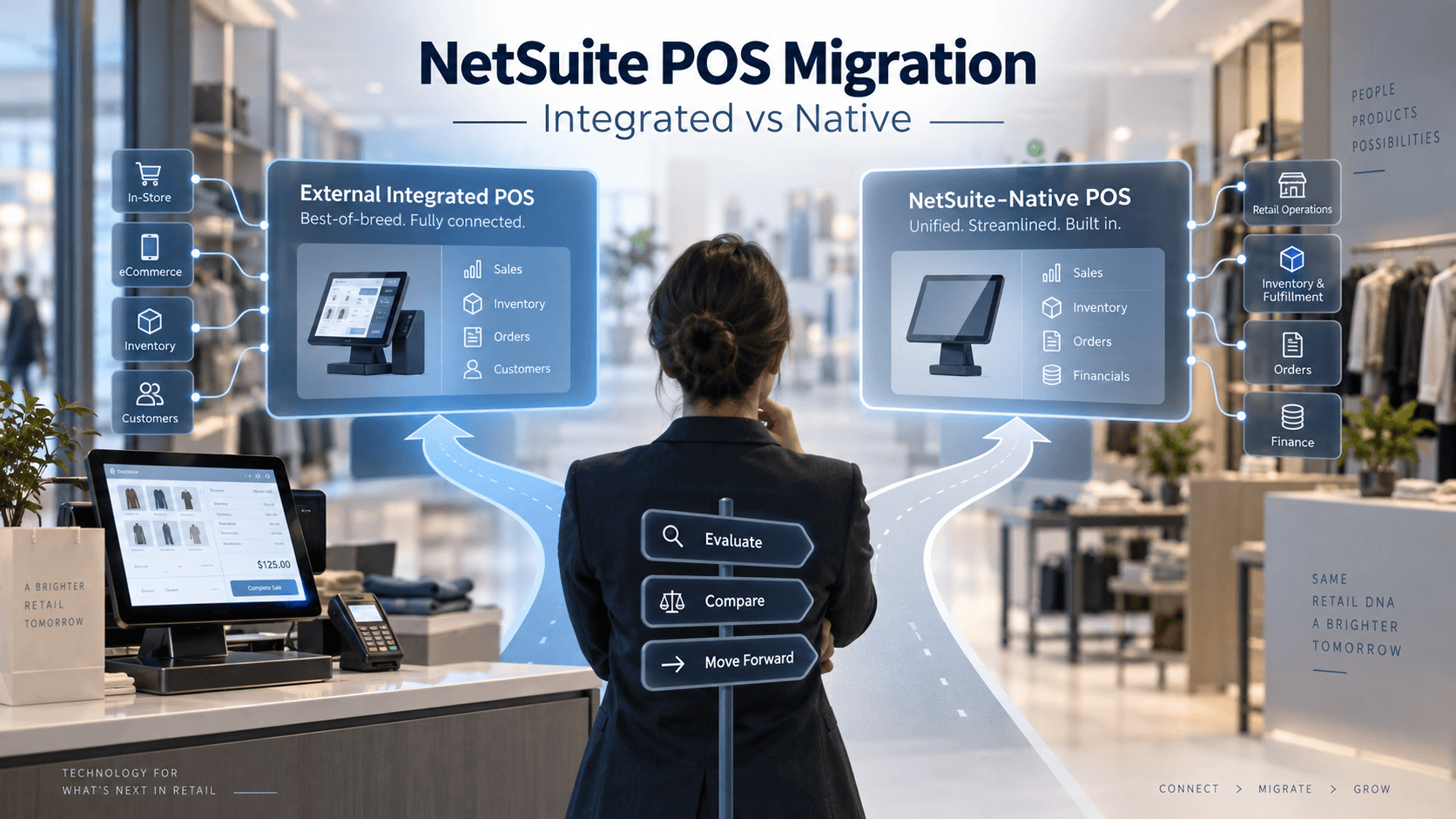
Beyond NSPOS and SCIS: What NetSuite Retailers Should Consider
Oracle is retiring NSPOS and SCIS, with support through 2029. The real question isn't just what replaces them — it's whether your next POS should be integrated with NetSuite or built around it.
SphericalBRM Team
All articles
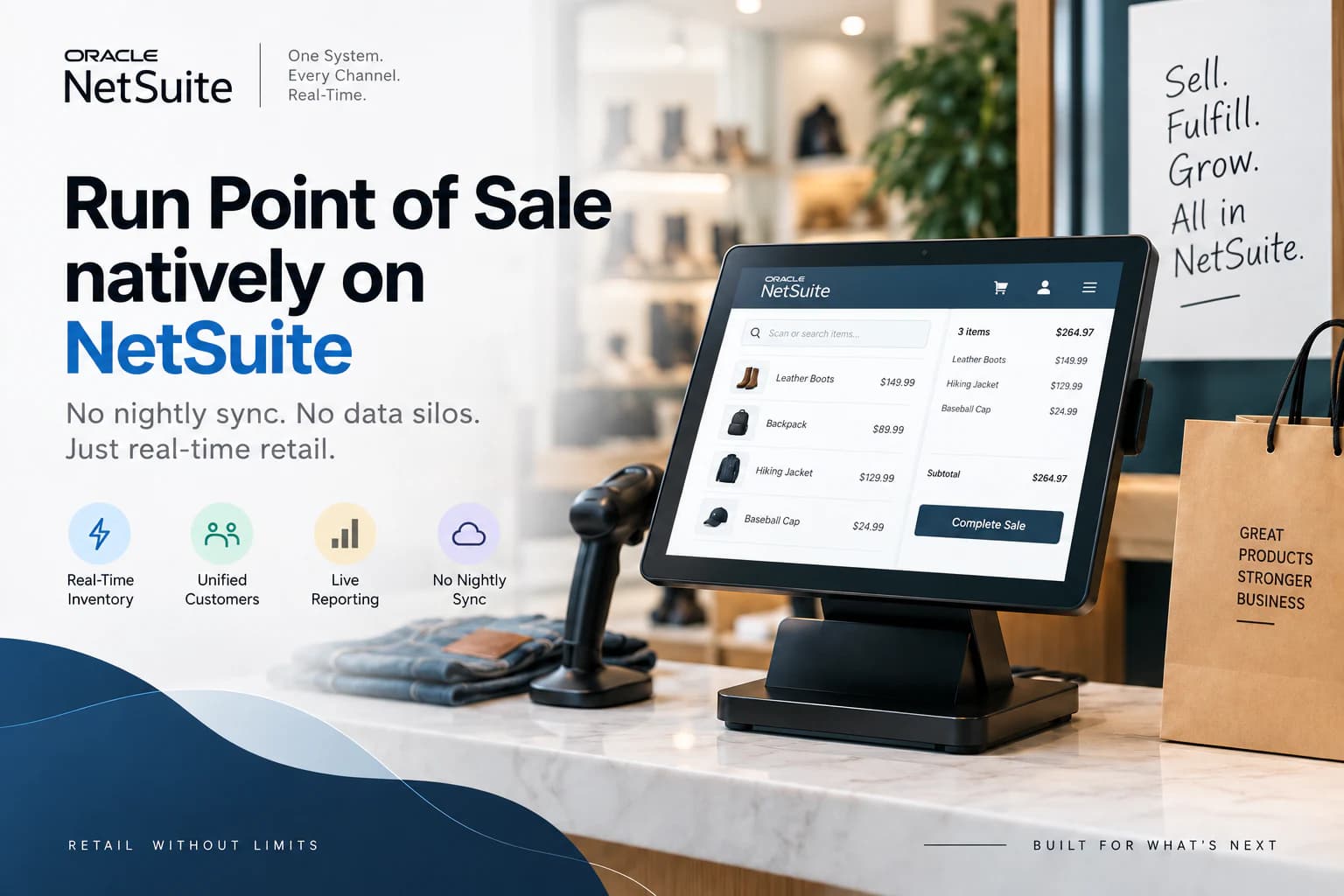
Run point of sale natively on NetSuite — no nightly sync
Run point of sale directly on NetSuite so transactions, inventory, customers, and reporting stay connected in real time — without another retail database to reconcile.
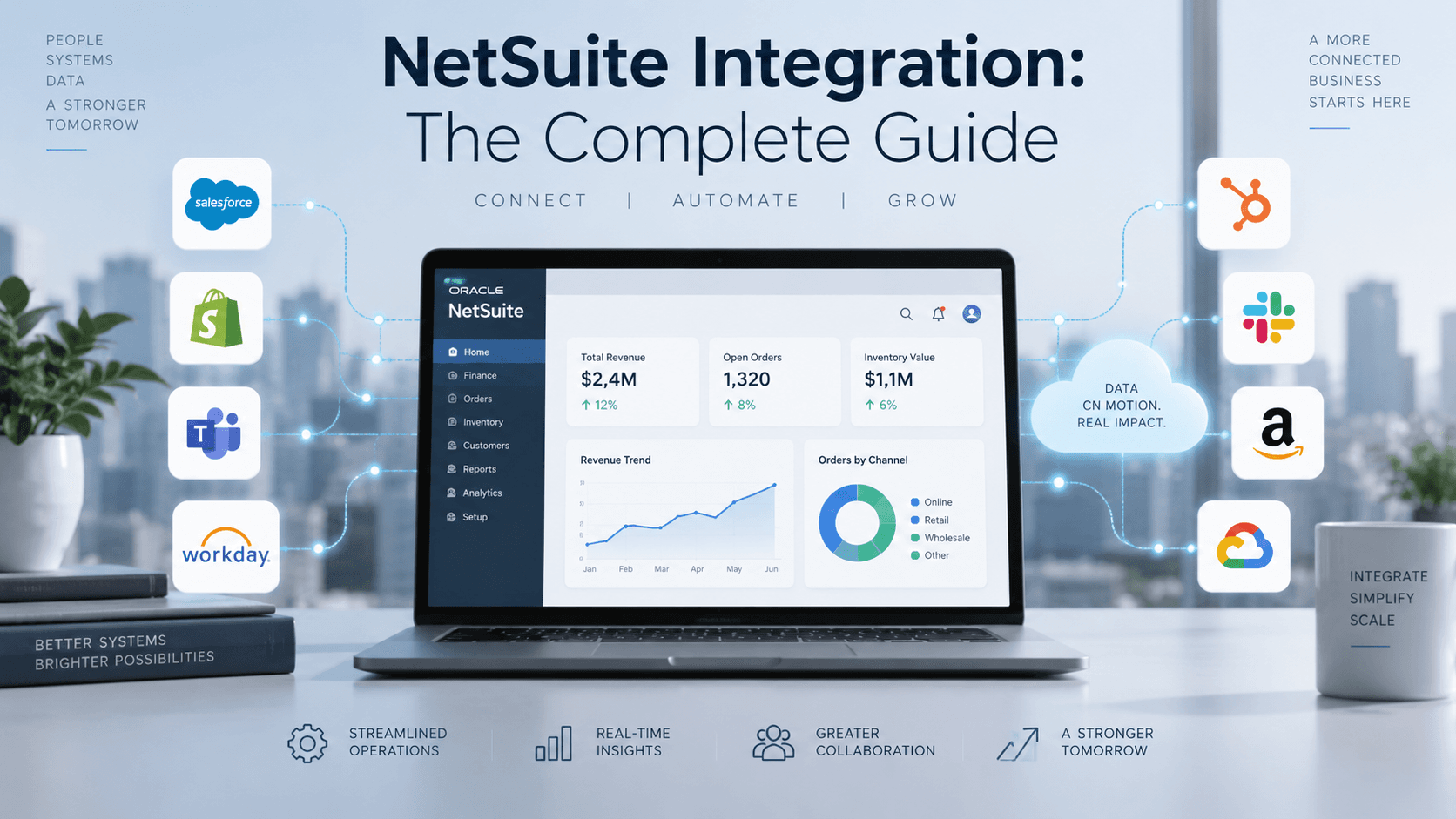
NetSuite Integration: The Complete Guide
NetSuite integration is the process of connecting NetSuite with other systems — eCommerce, marketplaces, 3PL/WMS, CRM, payments, and POS — so data like orders, inventory, and fulfillment moves between them automatically. The main approaches are native SuiteApps, iPaaS middleware, point-to-point connectors, and custom development, each with different trade-offs in cost, maintenance, and where your data lives.
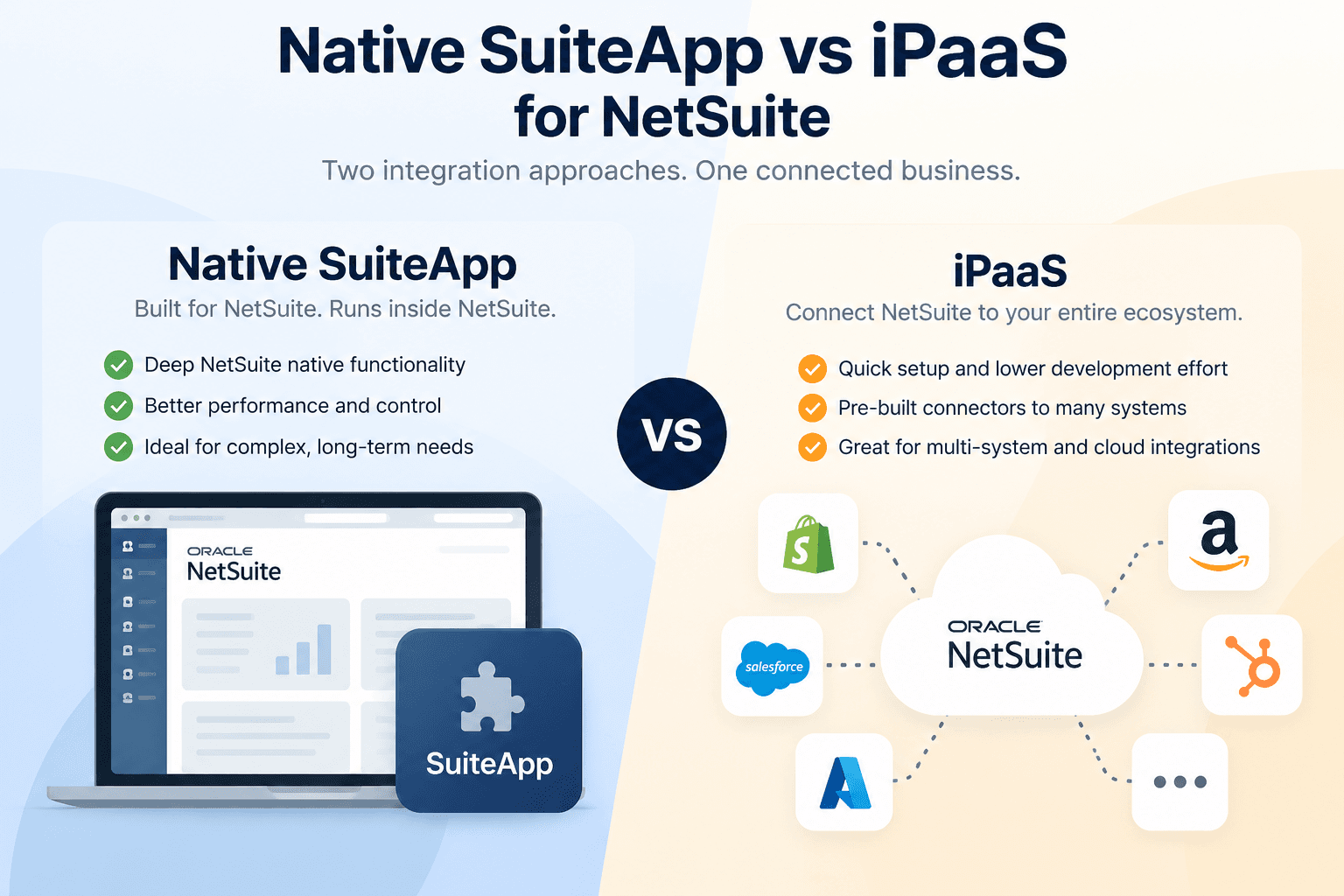
Native SuiteApp vs iPaaS for NetSuite
A native SuiteApp runs the integration inside NetSuite itself, with no middleware and your data staying in your account. An iPaaS (integration platform as a service) runs in a separate cloud between your systems, moving data through configurable flows. SuiteApps favor NetSuite-centric operations wanting fewer moving parts; iPaaS favors orchestrating many systems where NetSuite is one of several hubs.
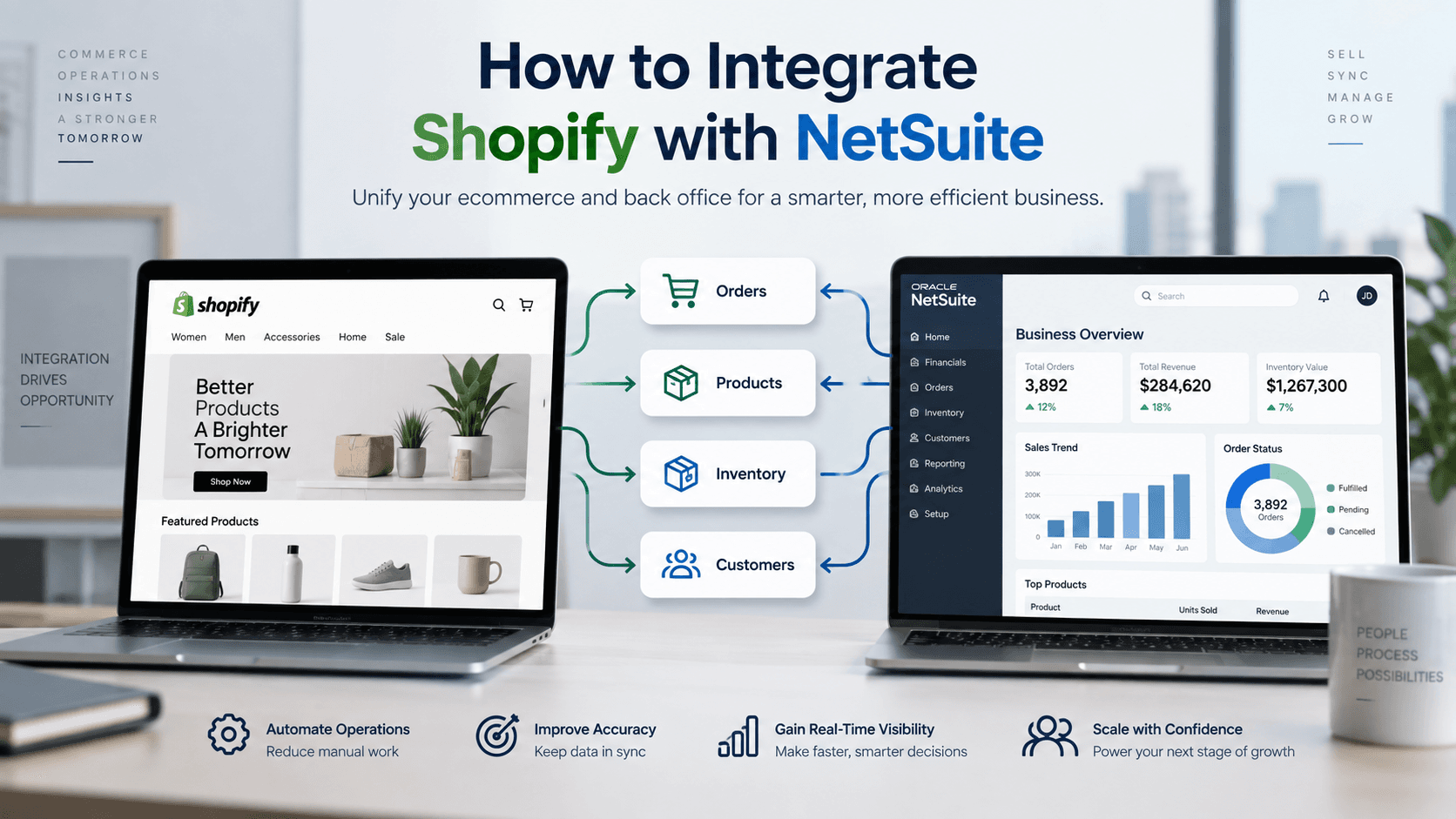
How to Integrate Shopify with NetSuite
Integrating Shopify with NetSuite means syncing customers, products, orders, inventory, and fulfillments between the two so the storefront and the ERP always agree. You can do it manually, with an iPaaS, or with a native SuiteApp. A native SuiteApp keeps the sync inside NetSuite in real time — the approach that best prevents overselling and manual reconciliation as order volume grows.